Tapered Insulation for Flat Roofs
Add Slope for Better Drainage & R-Value
Ask us about tapered insulation when its time for a roof replacement.
(905) 397-1198 Contact Us for a Free QuoteGet a Roofing Quote
Every FLAT ROOF NEEDS SLOPE
Ponding Water Is a Slope Problem, Here's How We Can Fix It
Every commercial flat roof is supposed to have some slope, even if it looks dead level from the ground. When the slope is wrong from day one, or when the deck has settled over the years, water stops moving toward the drains.
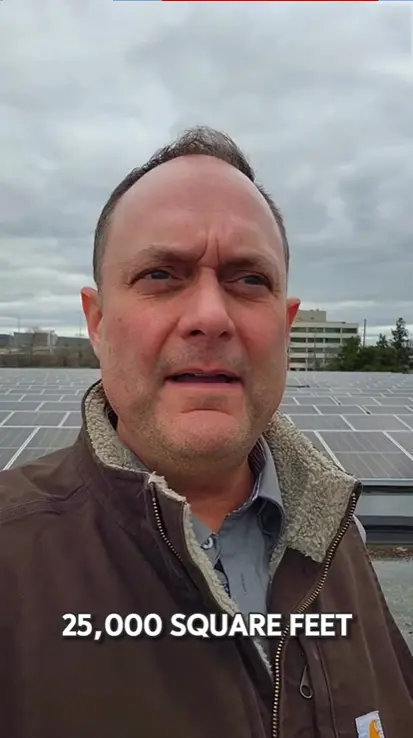
In this walkthrough, Kirby Hewines shows what happens on a flat roof when the slope has given out and water has nowhere to go. Tapered insulation rebuilds that slope during a full or partial roof replacement, without touching anything inside the building.
Want to know your roof's condition? Get a FREE roof condition report:
50+ Point Roof Inspection
by commercial roofing experts
Photo Documentation
of all wear, damage, and deterioration
Detailed Summary of Defects
with prioritized action items and cost estimates
Three Jobs in One
How Tapered Insulation Improves Your Flat Roof
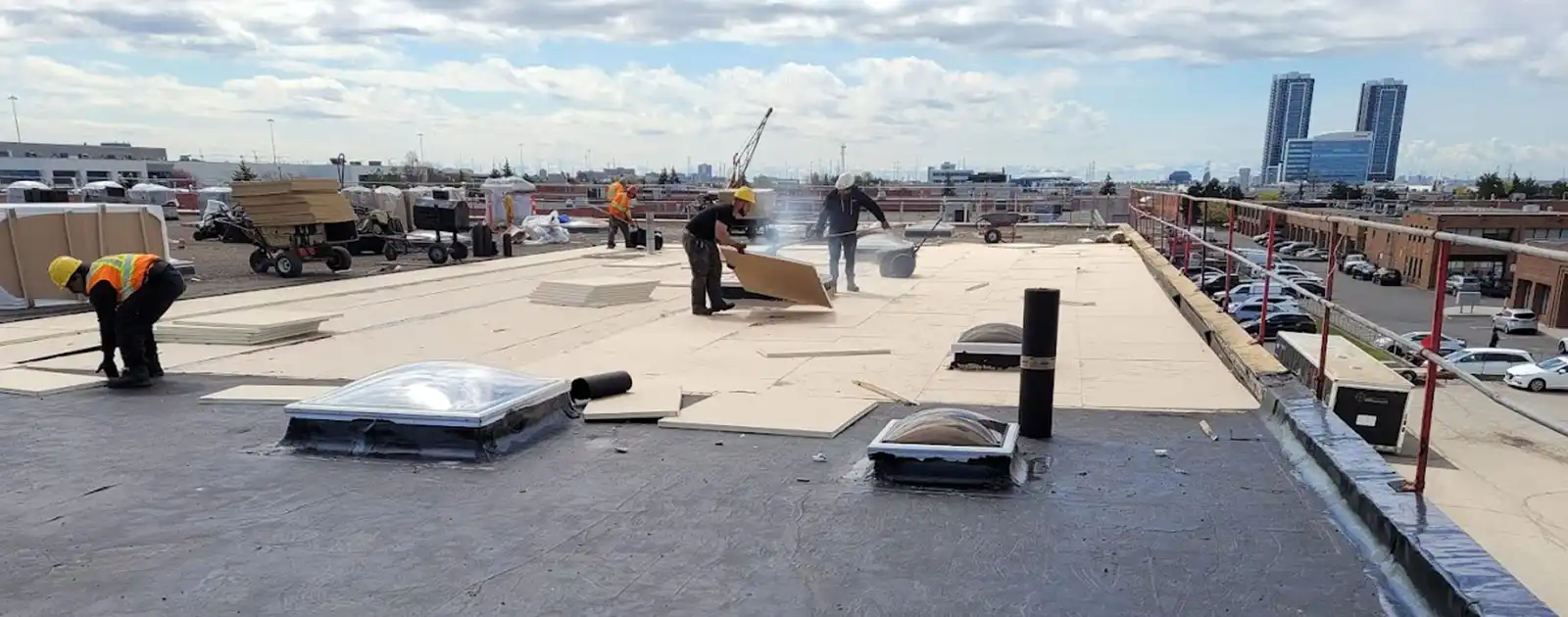
Tapered insulation is one of the few flat roof upgrades that solves more than one problem at the same time. It builds slope where there isn't any, adds R-value to the whole assembly, and integrates cleanly into a roof replacement.
It's also far cheaper than the alternative. Adding new drains or plumbing to fix chronic ponding can run $20,000 to $50,000 on a commercial roof. A tapered insulation system usually solves the same problem for a fraction of the price.
Drainage without the plumbing
Stacked polyiso panels build the slope your roof is missing and direct water straight to the drains, no extra plumbing required — see drainage systems.
R-value upgrade
Every layer of tapered polyiso adds R-value to the assembly, which lowers heating and cooling bills for the life of your roof — see R-value benefits.
Built into a full or sectional re-roof
The cheapest time to add tapered insulation is during a full or sectional replacement, as part of the same install — see flat roof replacements.
Case Study
From 3-Inch “Great Lake” to a New Roof with Proper Draining
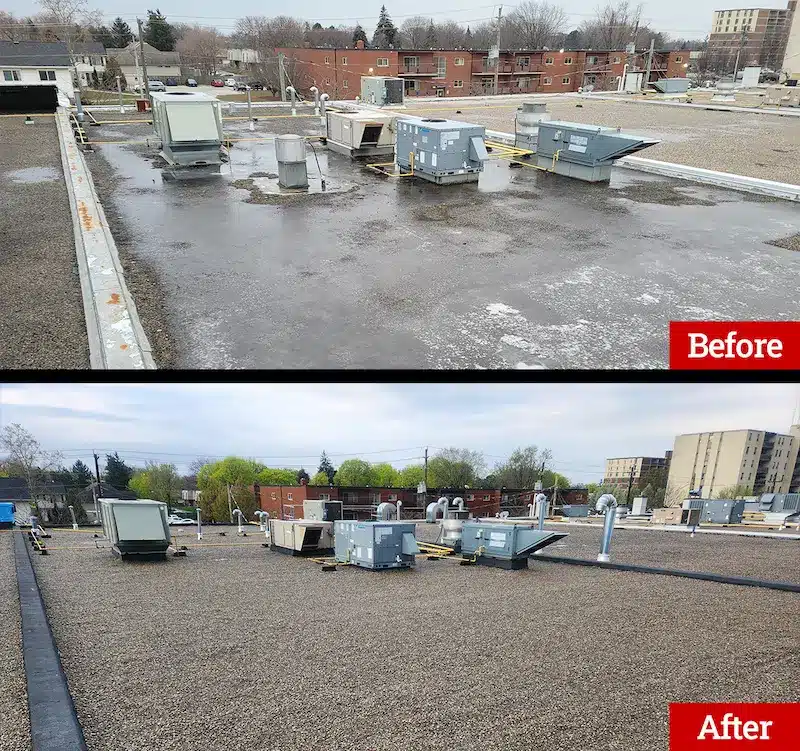
This building in Burlington had severe ponding with more than three inches of standing water that just wouldn’t drain. They were quoted $20,000 for new plumbing and drainage but offered tapered insulation as an affordable alternative.
Within 5 days, we designed a tapered insulation system that corrected the slope for just $8-9K. Throughout the entire process, tenants stayed operational and the finished roof now has a proper slope that clears water after every storm.
How we assess your roof
How We Confirm Tapered Insulation Is the Right Choice
Every project starts with an on-site walkthrough and a free roof condition report.
On-site inspection
We photograph every ponding spot, membrane issue, and drainage problem we find. You get visual proof of what's happening, and we get the information we need to quote the right fix.
Measure puddle depth
Puddle depth and spread tell us exactly how much slope to build and how much material the job needs. Accurate measurements mean an accurate quote with no surprises once work begins.
Core sample (if needed)
A core sample shows us the insulation type, thickness, and moisture content underneath the membrane. Essential on a full re-roof, as well as whether your insulation can be reused.
Is tapered insulation a capital expense or a maintenance item?
On most commercial and industrial properties, tapered insulation is a capital expense — especially when it's installed as part of a full or sectional roof replacement. Owners and property managers typically fold it into their CapEx planning alongside drainage and insulation upgrades. Our CapEx planning guide walks through how to budget for this kind of work across a roof's lifespan.
Can tapered insulation be installed on just part of a roof?
Yes. We install tapered insulation on full roof replacements and on targeted sections where the ponding is concentrated. Sectional work is useful when the rest of the roof is still in good condition and you only need to fix the area where water is collecting. It's also the most cost-effective way to extend the life of a roof that isn't ready for a full replacement.
Who typically orders tapered insulation — owners or property managers?
Property owners and investors usually come to us when they're planning for a roof replacement or trying to extend the life of an aging asset before sale. Property managers usually come to us after a ponding problem has been flagged by a tenant or an inspection. Either way, the conversation starts with a free on-site assessment.
How do I know if tapered insulation is the right solution for my building?
The rule we tell every customer is simple: if water is still standing on your roof three days after it rains, you have a slope problem, and tapered insulation is usually the answer. For a complete picture of how flat roofs fail, the cost of reactive repairs, and where tapered insulation fits into the broader maintenance strategy, see our Commercial Roofing Report for Ontario.
Will tapered insulation extend the life of my existing roof?
It depends on the condition of the membrane and insulation underneath. If the rest of the roof is sound, tapered insulation can add years of service life by eliminating ponding and reducing thermal stress on the assembly. Pairing it with a Preventative Roof Maintenance Plan is the best way to protect that investment long-term, since scheduled inspections catch new issues before they undo the work.