
Key Takeaways
- The four main drainage types — internal drains, gutters, scuppers, and siphonic systems — each suit different roof sizes and building profiles.
- Clogged drains are the single most common cause of ponding on Ontario commercial roofs, and ponding is a top driver of premature membrane failure.
- Drain clearing and a scheduled inspection in both spring and fall cover the bulk of what good drainage maintenance requires.
- When ponding is structural rather than clog-driven, tapered insulation or drainage redesign at replacement time solves it at the source.
Flat commercial roofs are not actually flat. They are built with a small, designed slope that moves water toward drains, scuppers, or gutters. When that system is undersized, poorly installed, or left to clog, the water sits. In Ontario’s climate, standing water degrades the membrane in summer and freezes into wedges of ice in winter, prying at seams and flashings until something fails.
This guide covers the main drainage systems used on commercial flat roofs, how each performs in real buildings, what happens when they stop doing their job, and what a realistic maintenance schedule looks like. For property managers across Toronto and the GTA, drainage is one of the few building systems where a modest amount of attention prevents a disproportionately large repair bill.

What Makes Flat Roof Drainage Systems So Important?
A commercial flat roof moves water through one or more of four mechanisms: internal drains, gutters, scuppers, or siphonic drainage. The system a building actually has often depends more on when it was built than on what would be ideal today. An existing drainage system can usually be upgraded or retrofitted without a full roof replacement, but only if the performance of each component is understood first.
Understanding Flat Roof Drainage Options
Each of the four drainage types has a legitimate application, and none is the right fit for every building:
- Internal drains: Positioned at low points and routed through the interior of the building. The most common choice on larger commercial roofs.
- Gutters: Mounted along the roof edge, channelling water to downspouts. Effective on smaller or mid-size buildings where the roof perimeter is accessible.
- Scuppers: Openings cut through the parapet that let water drain off the roof edge. Simple, reliable, often used as overflow protection alongside primary drains.
- Siphonic drainage: Uses engineered pipe sizing and full-pipe flow to move high water volumes efficiently. More common on large-footprint industrial buildings.
Each system has its advantages, and the best choice depends on the building’s design and location.
| Type of Drainage System | Pros | Cons | Potential Pricing | Ease of Installation |
|---|---|---|---|---|
| Internal Drains | Effective in removing water; Less visible; Suitable for large roofs | Can clog easily; Requires regular maintenance | Moderate to High | Complex |
| Gutters | Cost-effective; Easy to install; Ideal for small to medium roofs | Visible; Can overflow if not maintained | Low to Moderate | Simple |
| Scuppers | Simple design; Effective in heavy rain; Low maintenance | May not handle large volumes well; Limited to roof edges | Low | Simple |
| Siphonic Systems | Highly efficient; Handles large volumes; Reduces pipe size | High initial cost; Requires precise installation | High | Complex |
What Happens When Drainage Systems Fail?
When a drainage system stops working, the problems compound quickly:
- Ponding: Water that sits on the membrane for more than 48 hours after rainfall. Standing water accelerates membrane UV damage in summer and causes ice damage in winter.
- Structural stress: Ponded water is heavy. One inch of water across a 10,000 sq ft roof is roughly 26,000 kg. Undersized or clogged drainage turns a rain event into a live load the structure was not designed to carry continuously.
- Interior damage: Water that finds a pathway through the membrane rarely stays at the point of entry. It travels along the deck, through insulation, and eventually stains ceilings, saturates walls, or reaches electrical infrastructure.
- Accelerated replacement costs: Chronic drainage failure shortens roof life significantly. A system that should serve 30 years can be compromised in half that time if water has been sitting on it every spring and fall.
If you notice signs of poor drainage, take action now to prevent costly repairs in the future.
MAXIMIZE ROOF LIFE WITH A
Preventative Roof Maintenance Plan
Avoid surprise repairs and extend the time between costly replacements with expert maintenance tailored to your roof.
Reduce costly repairs
Prevent leaks & damage
Extend roof life
How Can Proper Drainage Benefit Your Building?
Drainage performance is one of the cheapest investments available on a commercial roof relative to what it protects. A functional drainage system:
- Prolonged Roof Life: Proper drainage minimizes water damage, significantly extending the lifespan of your roof.
- Cost Savings: By preventing water-related issues, you can save on repair costs and avoid expensive replacements.
- Enhanced Structural Integrity: Good drainage supports the overall health of your building, preventing structural issues that could compromise safety.
- Regulatory Compliance: Effective drainage ensures your building meets safety standards and regulations, avoiding potential fines and legal issues.
Imagine the peace of mind knowing your investment is protected against the elements.
What Are the Key Components of Effective Drainage Systems?
An effective drainage system is not just a set of drains. It is a combination of primary drainage, secondary or overflow capacity, and maintenance access:
- Internal Drains: These are placed strategically at low points on the roof, directing water through pipes within the building. Regular maintenance is essential to prevent clogs and ensure smooth operation.
- Gutters: Installed along the edges, gutters collect and channel water away from the building. Keeping them clean and secure is key to preventing overflow and damage.
- Scuppers: Openings on the roof’s edge that allow water to drain off. They are simple yet effective, especially in heavy rain conditions.
- Additional Features: Overflows, drain covers, and heating elements (to prevent ice build-up) can enhance the efficiency and reliability of your drainage system.
Do you know if your roof has all the necessary components for effective drainage?
Installation quality and ongoing maintenance determine whether the system performs as specified. A few practical notes from what I see in the field:
- Best Practices for Installation: Always hire experienced professionals for the installation. They’ll ensure that all components are correctly placed and functioning optimally.
- Regular Maintenance: Schedule regular inspections and cleaning to keep the system free of debris and functioning properly. Twice a year is a good rule of thumb, with additional checks after major storms.
- Signs of Trouble: Look out for slow drainage, water stains, or unusual sounds. These could indicate blockages or other issues that need immediate attention.
- DIY Tips vs. Professional Help: While minor cleaning can be handled in-house, significant repairs or installations should always be left to professionals to avoid further complications.

Can Emergency Repairs Save the Day?
A commercial building in St. Catharines called us after a heavy rain event caused their flat roof to fail under the weight of accumulated water. The drainage system had not been maintained, and the drains were clogged badly enough that water had nowhere to go during the storm.
- Assessment: Our team of expert roofing contractors was called in for an emergency repair. Upon inspection, we identified that the primary cause of the collapse was the outdated and poorly maintained drainage system. Water pooling had put immense stress on the roof, eventually leading to its failure.
- Solution: We provided immediate emergency repairs to stabilize the situation and prevent further water damage. This involved quickly clearing out blockages, installing temporary supports, and patching up the most critical areas of the roof.
- Outcome: While the emergency repair prevented further immediate damage, we emphasized that this was only a temporary fix. To avoid future disasters, we strongly recommended implementing a regular maintenance schedule and routine cleaning of the drainage system. Proper upkeep would ensure that the drains remain clear and functional, preventing water accumulation and potential collapses.
The point of this account is not the drama of the failure. It is the predictability of it. By the time a roof fails under water load, the warning signs have usually been present for months or years. Drains full of leaves. Ponded water that never dries. Stains on ceiling tiles below. Regular inspection would have caught all of it.
How often should commercial roof drains be cleared?
At minimum twice a year — once in the spring after winter debris accumulates, and once in the fall before leaves and seed pods drop. After significant storm events, an additional check is worth doing. This schedule is part of every Preventative Roof Maintenance Plan.
What causes ponding water on a flat roof?
Three common causes. Clogged drains are the most frequent and the easiest to fix. Inadequate slope from the original roof design is harder to correct — it usually requires a tapered insulation retrofit at replacement time. Structural deflection from age or overloading is a third cause, and one that needs engineering assessment.
Can a flat roof drainage system be upgraded without replacing the whole roof?
Yes, in many cases. Drain replacement and upgrades can be performed as standalone projects. Adding overflow scuppers, resizing drain bodies, or replacing corroded drain assemblies can significantly improve performance without a full tear-off.
What are the warning signs of a failing roof drainage system?
Visible ponding more than 48 hours after rainfall, water stains on interior ceilings near roof drains, slow-draining water around drain bowls, and overflow from gutters or downspouts during moderate rain. Any of these should trigger an inspection.
Is drainage something your can inspect myself?
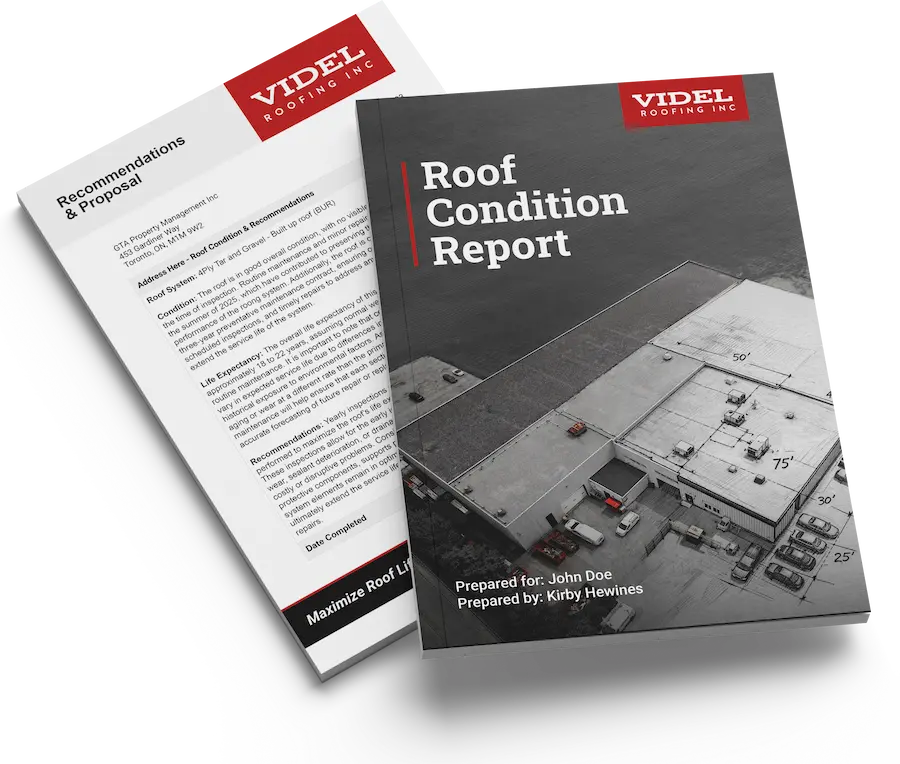
Basic debris clearing and visual checks can be done by on-site maintenance staff, provided they have safe roof access and fall protection. Anything involving the condition of the drain assembly, the membrane around the drain, or structural concerns should be handled by a commercial roofing contractor. Request a free Roof Condition Report for a full documented assessment.