
Key Takeaways
- BUR outperforms single-ply membranes like TPO and EPDM when it comes to Ontario’s freeze-thaw cycle and heavy-traffic commercial roofs.
- Insulation choice directly affects both R-value performance and long-term waterproofing.
- Tapered insulation eliminates ponding water at the source; reusing sound existing insulation can reduce replacement costs significantly.
- Material selection at replacement determines whether your next roof lasts 15 years or 40.
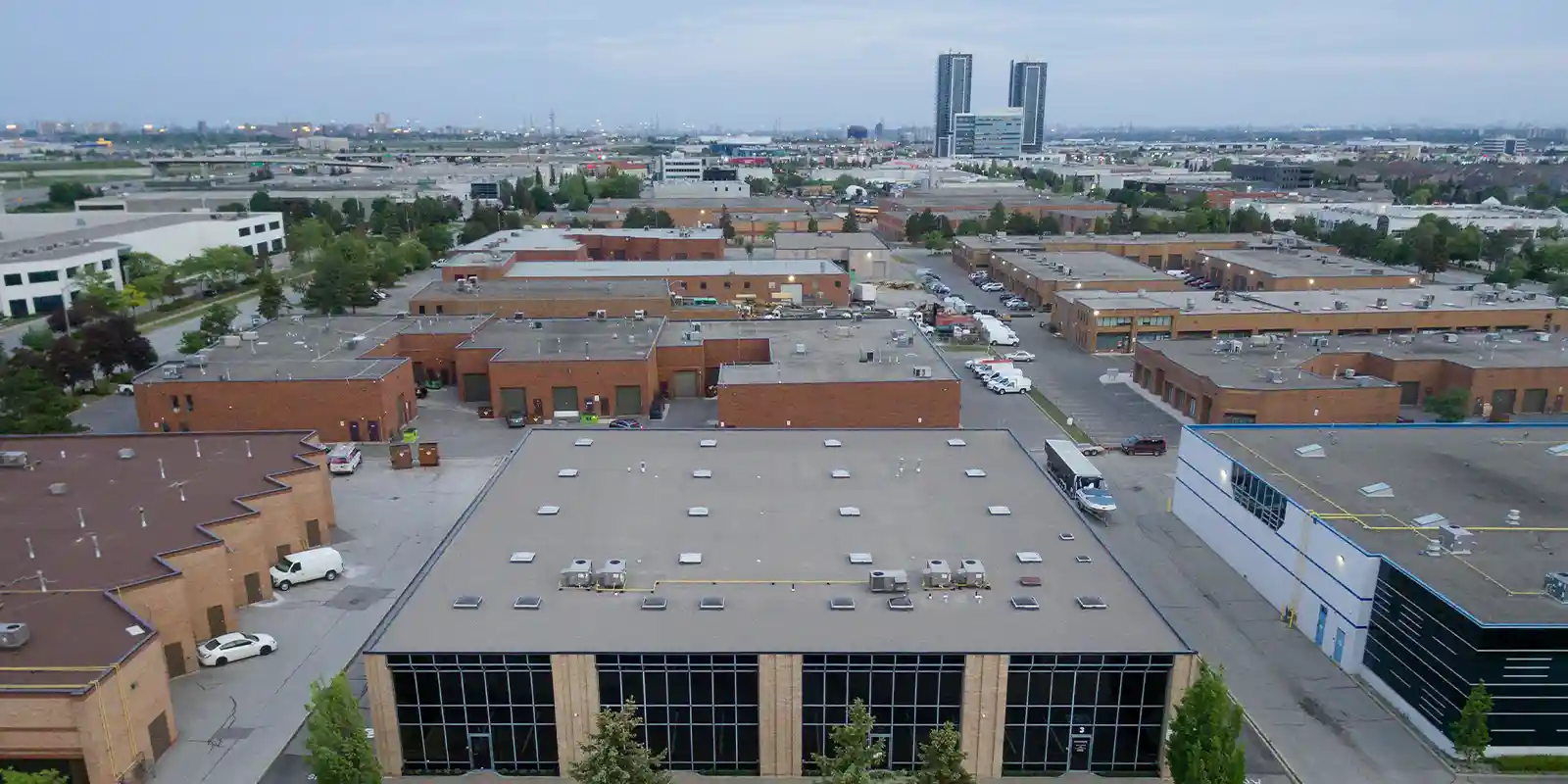
The question property managers most often get wrong is not how much will flat roof materials cost to install. It is which one costs less over the life of the building. On Ontario commercial roofs, that distinction matters more than almost anywhere else in the country. Freeze-thaw cycles, ponding from inadequate slope, and decades of deferred maintenance put membranes under stress that southern-climate specifications were not built for.
This post covers the four roofing systems we install and assess most often: 4-ply Built-Up Roofing (BUR), 2-ply modified bitumen, TPO, and EPDM. It also covers the insulation decisions that sit underneath the membrane, including why tapered insulation and insulation reuse are now central to how we approach most re-roofing projects.

Why Material Selection Matters More on Flat Roofs Than on Sloped Ones
Sloped roofs shed water by gravity. Flat commercial roofs rely on membrane integrity and designed drainage to move water off the deck. When either fails, water sits.
Standing water accelerates membrane degradation, works into seams and flashings, and eventually finds the deck. In Ontario, the problem compounds. Water that enters a membrane in autumn freezes on the first cold snap, expanding in the voids it has already occupied. By March, what started as a small blister may be an open split.
The roof system you choose determines how many freeze-thaw cycles that membrane can absorb before it fails. It also determines how much insulation R-value the assembly can hold and whether the drainage geometry keeps water moving or lets it pond. Those factors compound across decades.
The Four Systems: How BUR, Modified Bitumen, TPO, and EPDM Compare
Most commercial re-roofing decisions in Ontario come down to one of four membrane systems. Each has a legitimate use case with varying lifespans.
| System | Best for | Ontario performance | Typical lifespan |
|---|---|---|---|
| 4-ply BUR | Heavy-traffic commercial and industrial roofs with long hold periods | Excellent. Multiple plies handle freeze-thaw cycling and standing water without membrane degradation. | 25-40 years with maintenance |
| 2-ply Modified Bitumen | Mid-range commercial re-roofing or additions with moderate traffic | Good. Fibreglass-reinforced base sheet resists cracking; cap sheet provides UV resistance. | 15-25 years |
| TPO | Buildings in hot climates seeking reflective surfaces and LEED credit | Below average for Ontario. Seams can fail under repeated freeze-thaw stress; not recommended for heavy-traffic roofs. | 15-20 years (climate-dependent) |
| EPDM | Warehouses or low-traffic facilities with simple membrane needs | Average. UV-resistant but vulnerable to punctures and seam failure in heavy-traffic applications. | 20-30 years (single-ply) |
4-Ply BUR: Why Videl Recommends It for Most Heavy-Traffic Commercial Roofs
Built-Up Roofing has been installed on Ontario commercial buildings for well over a century. The core principle is layering: alternating bitumen and reinforcing felts, built to a specified ply count. A 4-ply BUR system gives the membrane four independent barriers before water can reach the deck.Where single-ply membranes have one layer and one set of seams, BUR distributes the load. A blister, crack, or seam failure in the cap sheet does not translate immediately to a leak. That redundancy matters on roofs with HVAC curbs, drains, pipe penetrations, and regular foot traffic from maintenance trades. See Videl’s commercial roofing materials page for full system specifications.

2-Ply Modified Bitumen: The Mid-Range Option
Modified bitumen systems use a fibreglass or polyester-reinforced base sheet with a cap sheet bonded on top. The cap sheet is either APP (atactic polypropylene) or SBS (styrene-butadiene-styrene) modified. SBS-modified systems flex better in cold, which makes them a more appropriate choice for Ontario than APP for most applications.

A 2-ply system is faster to install than 4-ply BUR and less expensive. It is a reasonable choice for additions, partial replacements, or buildings with lower foot traffic. For high-traffic roofs or long planned hold periods, the extra investment in BUR generally pays back.
TPO and EPDM: Honest Assessment
TPO (thermoplastic olefin) and EPDM (ethylene propylene diene monomer) are both widely installed across North America. They are cost-effective and faster to install than multi-ply BUR. For the right building, either can perform adequately.
The honest assessment for Ontario: neither system handles heavy commercial foot traffic as well as BUR, and neither provides the same redundancy when seams or flashings fail. TPO in particular is not a system we recommend for commercial roofing in Toronto and the GTA when the building will carry regular rooftop maintenance traffic or has a complex penetration field.
EPDM performs better in low-traffic applications, particularly on simple-profile warehouse roofs where the membrane is not being walked regularly. Lifespan is reasonable with proper maintenance. It remains vulnerable to punctures and to seam adhesion failure over time.
Insulation Is Part of the System, Not an Add-On
The membrane gets most of the attention in roofing discussions. The insulation underneath it determines two things the membrane cannot: how well the assembly holds R-value over time, and whether water that gets through the membrane finds a dry deck or saturated board.
Ontario’s building code sets minimum R-value requirements for commercial roofs. Meeting code at installation is not the same as maintaining that performance over 20 years. Wet insulation loses R-value. Compressed insulation loses R-value. Insulation that was never sloped correctly allows water to pond on the deck, which degrades both the insulation and the membrane above it. The R-value guide for Ontario building managers covers the code requirements and the performance gap between installed and actual thermal resistance in detail.
Tapered Insulation: Solving Ponding at the Source
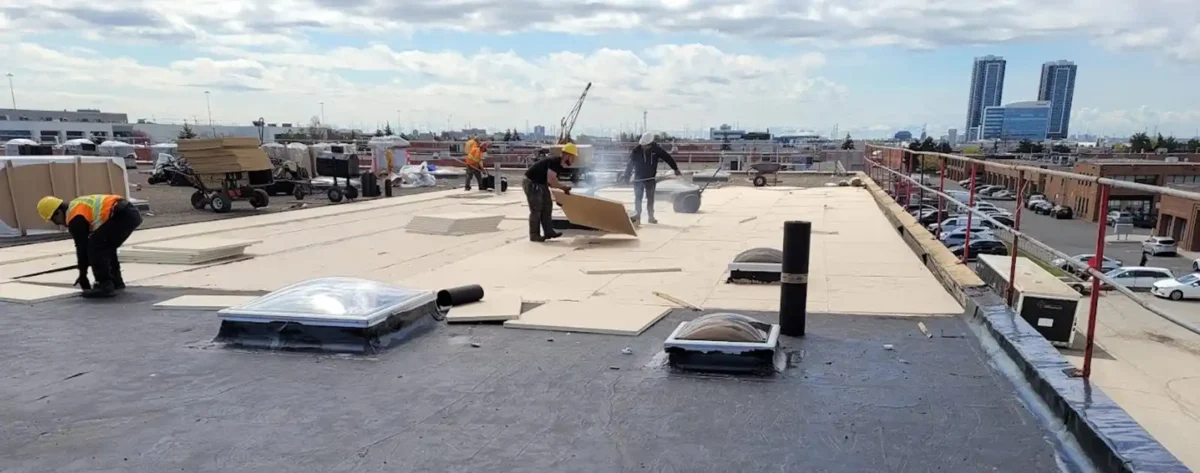
Many older commercial flat roofs were built with insufficient slope to drain effectively. The common result is ponding, where water collects in low spots and sits for days or weeks after rain. Ponding is one of the fastest ways to degrade any membrane system. Our tapered insulation service addresses this by building slope into the insulation layer itself rather than waiting for a drain to handle water the deck geometry cannot move.
Tapered insulation systems from suppliers like Posislope are cut to specified slopes and installed over the existing deck. When a re-roofing project involves ponding complaints, tapered insulation is often the correct fix rather than patching the membrane.
Reusing Existing Insulation: When It Makes Sense
Not every re-roofing project requires full insulation removal. If the existing insulation is dry, structurally sound, and meets current R-value requirements, it can often be reused under the new membrane assembly. Our insulation reuse service involves core sampling and moisture testing to determine whether the existing board is worth keeping.
When insulation reuse is viable, it reduces the volume of material going to landfill and reduces overall project cost. The qualifier is that the insulation must be genuinely dry. Wet or compressed board that meets none of the performance requirements does not belong under a new membrane, regardless of the upfront savings.
How to Match the Right System to Your Property
The variables that determine the right roof system are not complicated, but they require honest answers.
- Traffic load: How often do trades access the roof? HVAC maintenance, telecom, landscaping access to upper levels, and utility servicing all add traffic. High-traffic roofs need BUR or at minimum 2-ply modified bitumen.
- Planned hold period: If you are holding the property for 7 years and selling, a 2-ply system may be appropriate. If you or the next owner will hold for 25 years, the investment in BUR pays back through lower lifecycle cost.
- Existing deck condition: Core sampling reveals whether the existing insulation is wet and whether the deck itself is sound. Replacing a membrane over compromised insulation is a short-term fix.
- Drainage geometry: A roof with ponding issues needs drainage redesign, not just a new membrane. Tapered insulation or drain repositioning must be part of the specification.
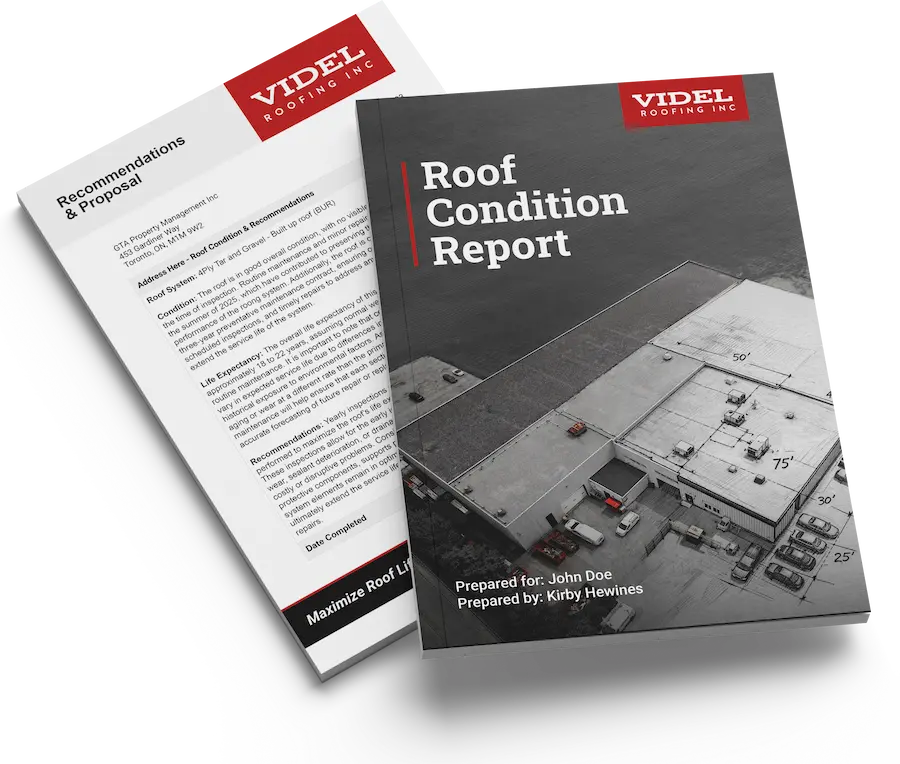
Our free Roof Condition Report documents all four of these variables in a format you can share with ownership, insurers, or a second-opinion contractor. It is the right starting point before any material selection conversation.
Three Ontario Projects: Material Decisions in Context
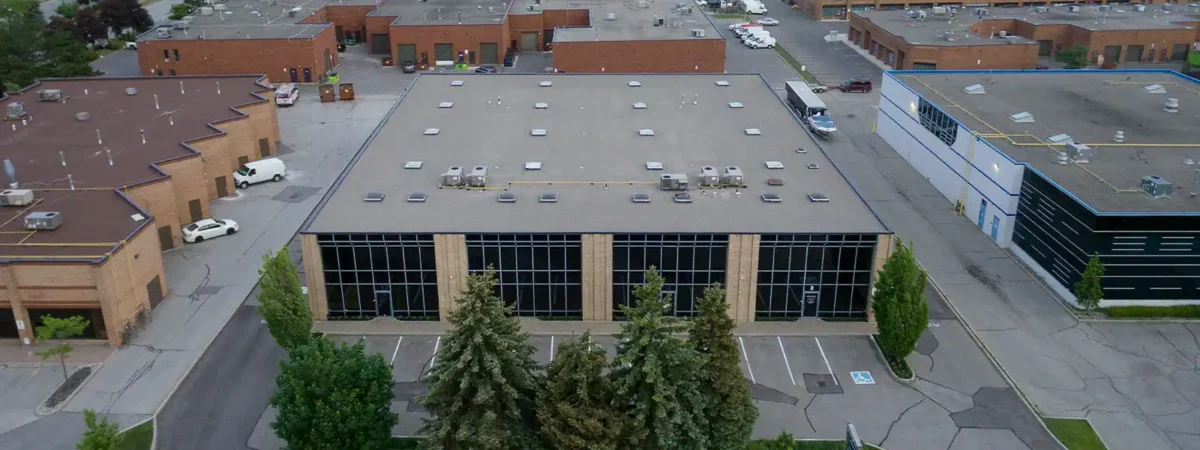
Vaughan: 30-Year Roof Replaced with 4-Ply BUR
A commercial building in Vaughan had an aging 30-year roof with active leaks and failing flashings. The replacement specification called for 4-ply BUR with improved drainage at the existing drain locations. The new system carried a 10-year warranty and eliminated the recurring repair spend that had accumulated in the final years of the previous roof.
St. Catharines: BUR with Drainage Correction
A 50-to-60-year-old commercial roof in St. Catharines had a long-standing ponding problem that had contributed to premature membrane failure. The BUR replacement included drainage corrections to address the geometry issue, not just the membrane above it.
Brampton: 5-Ply BUR for Industrial Application
A Brampton industrial building with escalating repair costs and ongoing leaks received a 5-ply BUR installation with a 20-year warranty. The heavier specification reflected the building’s industrial use profile and the owner’s long-term hold plan.
What to Confirm Before Your Next Roof Replacement
When a re-roofing project reaches the specification stage, the following questions determine whether the next roof performs as expected.
Has the existing insulation been core-sampled for moisture? Wet board under a new membrane continues to degrade.
Is the drainage geometry adequate, or are ponding areas being covered over? Tapered insulation should be part of the specification if ponding is documented.
Does the proposed ply count match the building’s traffic and hold period? A 2-ply system for a 25-year hold is a cost decision that becomes an operational problem.Is the insulation R-value at or above current Ontario Building Code minimums? The Preventative Roof Maintenance Plan includes R-value documentation as part of each annual inspection so you are not surprised at replacement time.
What is the difference between BUR and modified bitumen for commercial roofs?
BUR (Built-Up Roofing) uses alternating layers of bitumen and reinforcing felt to create a multi-ply membrane. Modified bitumen uses a single or double layer of polymer-modified bitumen sheet. BUR provides more redundancy: if the cap sheet is damaged, the plies beneath still protect the deck. Modified bitumen is faster and less expensive to install, making it appropriate for lower-traffic applications and shorter hold periods.
Is TPO a good choice for commercial roofs in Ontario?
TPO performs well in hot, cooling-dominated climates where the reflective surface reduces air conditioning load. Ontario is a heating-dominated climate, which reduces that advantage. More importantly, TPO seams can fail under repeated freeze-thaw stress. Videl does not recommend TPO for heavy-traffic commercial roofs or for buildings with complex penetration fields in Ontario.
What is tapered insulation and when does a flat roof need it?
Tapered insulation is cut at a specified slope and installed under the membrane to create positive drainage toward drain locations. It is the correct solution when a flat roof has documented ponding, meaning water that sits for more than 48 hours after rain. Covering ponding areas with a new membrane without addressing the drainage geometry is a short-term fix. See Videl’s tapered insulation page for how the assessment and installation process works.
Can existing roof insulation be reused when a commercial roof is replaced?
Yes, if it passes moisture testing. Videl takes core samples to assess whether the existing insulation board is dry and structurally sound before specifying removal. If the board is salvageable, reusing it reduces project cost and landfill volume. If it is wet or compressed below performance thresholds, it comes out. See the insulation reuse service page for how that assessment works.
How do I know which roofing system is currently on my building?
A Roof Condition Report identifies the existing system, documents insulation condition, and notes any code compliance gaps. Videl provides the first report at no charge. Request it at videlroofing.ca/roof-condition-report or call (905) 397-1198.
Videl has been installing and maintaining commercial and industrial flat roofs in Ontario since 1998. The right material decision starts with knowing what you have. Request a free Roof Condition Report and get a documented assessment of your roof’s current system, insulation, and projected service life.
For more information call (905) 397-1198 or visit videlroofing.ca/roof-condition-report.