
Key Takeaways
- HVAC curbs and roof penetrations account for most repair calls across every tenant type.
- Once patch repairs stop holding and the insulation is saturated, replacement is often cheaper than another season of leak chasing.
- A proper plaza replacement treats the roof as a full system: membrane, insulation, drains, vents, and flashings together.
Spend enough time walking flat roofs across Southern Ontario and you stop thinking of a strip plaza as one building. You start seeing it as six or eight or twelve unique tenants that require equally unique flat roof repairs due to:
- Grease vapour over the shawarma spot
- A dozen HVAC units over the fitness studio.
- Refrigeration condensers over the grocer.
- Cable penetrations over the bank.
Each of those tenants wears the roof differently, and the repair calls line up with the tenant mix almost every time. If you own or manage a shopping center in Ontario, here are the repairs we see most often, broken down by tenant, plus what extends roof life on a multi-tenant plaza.
Why Strip Plaza Roofs Fail Differently Than Other Commercial Roofs
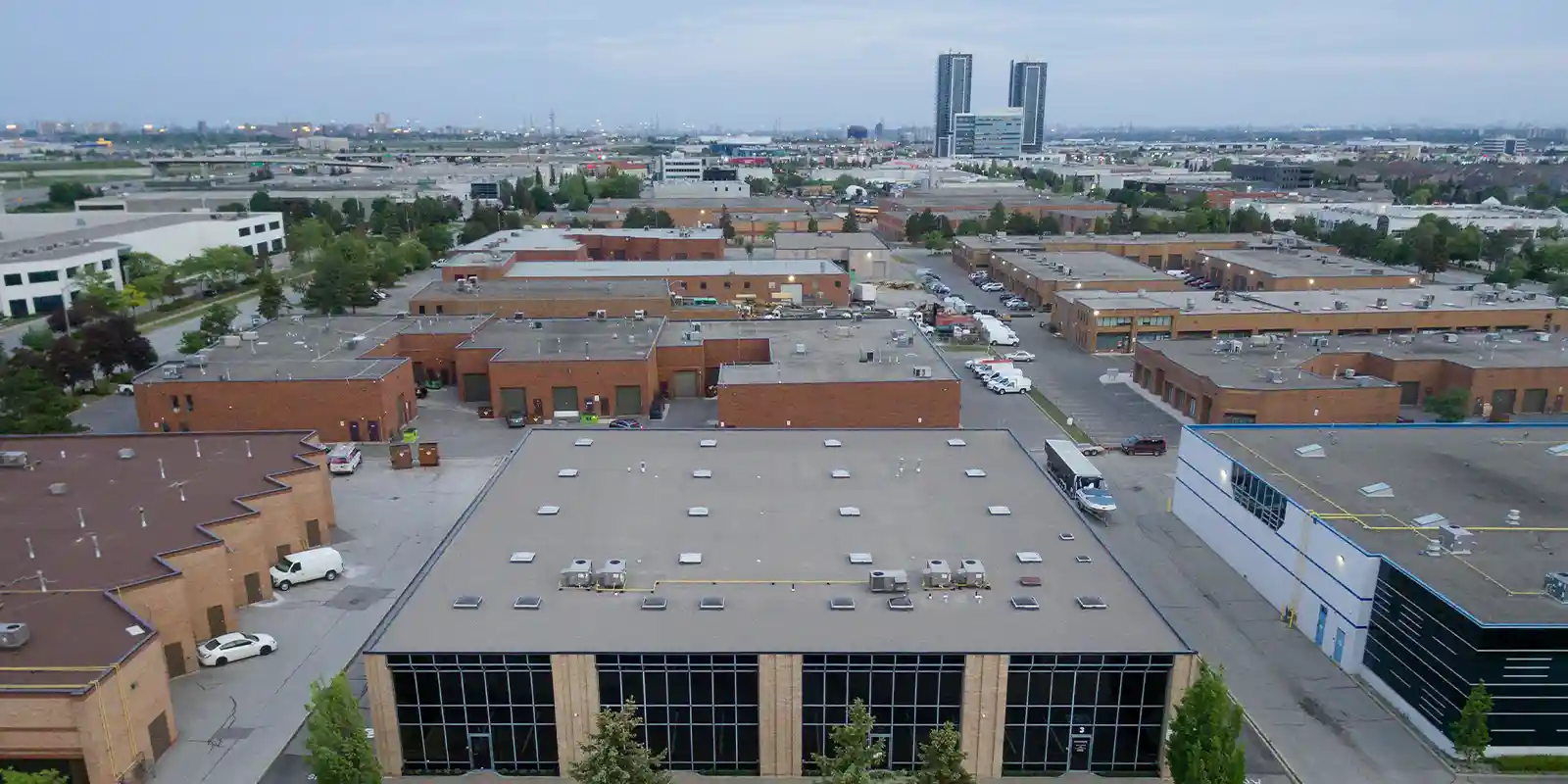
A warehouse roof has one tenant and one set of rooftop equipment. Strip plazas can have a dozen tenants and just as many sets of HVAC, exhaust, refrigeration, and cable penetrations cut through the same membrane. Every time a tenant changes out, something new gets added up there. One unit swaps from a dry cleaner to a pizza shop and a new kitchen exhaust fan gets cut into a membrane that was never designed for grease fallout. Lease the vacant unit next door to a fitness franchise and four more rooftop units land on curbs that weren’t there last month.
Every new penetration is a leak in waiting if the flashing detail is wrong, and on a retail plaza new penetrations failing happen constantly. That’s why most shopping center roof repairs come down to two things:
How Mixed Tenant Retail Plaza Impact Roof Repairs
Here are the types of tenant categories we see most often across Ontario plazas, the stress each one puts on flat roof systems, and the common repairs that follow.
Quick-Service Restaurants and Food Tenants
Tenants under the roofs we’ve worked on: Swiss Chalet, Boston Pizza, KFC, Harveys, Popeyes, Jersey Mikes, Pizza Pizza, Pizzaville, Mary Browns, The Noodlebox, Wings Up, Wild Wing, Meltwich, Chipotle, Nandos, Sunset Grill, Zoups, Mr. Greek, Freshii, Subway, Guac Mexi Grill, Firehouse Subs, Starbucks, Sunny Morning, Pita Pit, Booster Juice, Baskin Robbins, Pizza Nova, Wendy’s.
Food tenants are one the hardest on a flat roof system, no contest. The fryer exhaust fan sits on a curb right above the kitchen, and every shift it pushes grease-laden vapour out onto the membrane around it. Grease breaks down the membrane surface, softens asphalt-based systems, and leaves a dark halo around the fan that you can spot from an aerial photo.
What we end up repairing on food-tenant sections:
- Membrane degradation in the grease fallout zone around the exhaust fan
- Curb seals failing at the fryer exhaust from heat cycling and grease saturation
- Soaked insulation underneath the grease zone when the top layer has already failed
- Grease containment boxes that were installed and never cleaned, pushing the overflow back onto the roof
Most of these repairs mean replacing the membrane in the grease zone and fully resealing the exhaust curb. When the grease has soaked down through the insulation, that section has to come out with it.
Grocery, Pharmacy, and Anchor Retail
Tenants under the roofs we’ve worked on: Freshco, Shoppers Drug Mart, LCBO, Dollar Tree, IDA Pharmacy, Metro, M&M Meats, Terra Foods, Pet Valu, The Beer Store.
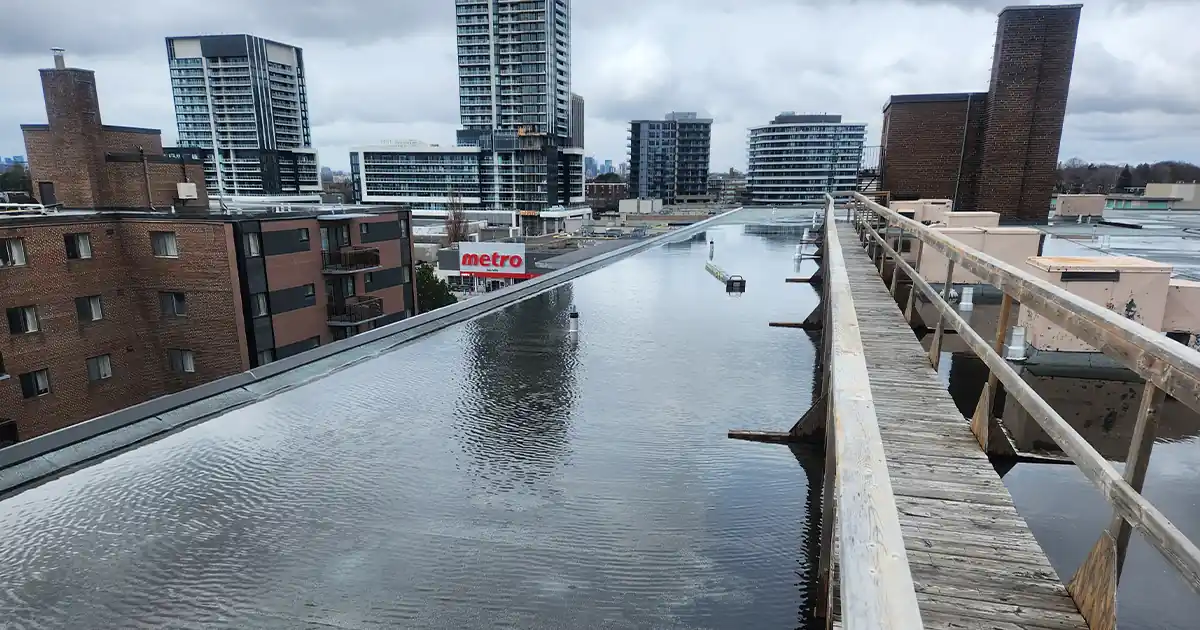
Grocery and pharmacy tenants run large refrigeration equipment around the clock. That puts heavy condensing units on curbs year-round, plus condensate lines running across the roof to the drains. A cracked condensate line or a clogged drain and you’ve got standing water sitting on the membrane directly above the refrigerated aisles.
What we end up repairing on grocery and pharmacy sections:
- Curb flashings worked loose by heavy equipment vibration over time
- Cracked or disconnected condensate lines pooling water on the membrane
- Drain backups from constant refrigeration runoff
- Large mechanical footprints concentrating weight on a small area of the roof
Most of the calls here are curb work or drain work.
Fitness Tenants
Tenants under the roofs we’ve worked on: LA Fitness, Anytime Fitness, Popeyes Fitness, Activityplex.
Fitness tenants put more mechanical load due to more potential foot traffic on the roof. Cooling a full floor of people working out takes oversized rooftop units, usually several of them sitting close together above the same tenant. That’s more equipment per square foot than almost anything else on a plaza. In the hot summer months, HVAC repairs mean more tradesman walking the roof which can lead to damaged curbs and holes in the membrane (we often find lost tools and a ton of screws that get left behind around HVAC units).
What we end up repairing on the roof above a fitness tenant:
- Curb flashings and sealant joints loosening from the cycling of multiple units running hard
- Fasteners backing out where mechanical loads are concentrated
- Foot traffic damage from HVAC service techs working on units through the summer months
- Ponding water between closely-spaced units where drainage gets blocked
If your plaza has a fitness tenant, expect more repair calls on that section than the others, especially coming out of summer service season.
Banks, Credit Unions, and Professional Services
Tenants under the roofs we’ve worked on: Royal Bank, TD Canada Trust, Meridian Credit Union, First Choice Haircutters, Code Ninja.
Banks and service tenants are easy on the roof mechanically. What they add over time is penetrations. Cable runs for data lines, antenna mounts, alarm conduits, lighting controls, ATM security wiring. Every one of them goes through the membrane and needs its own watertight detail.
What we end up repairing on bank and services sections:
- Small penetrations added years after the original install, often not terminated into the membrane properly
- Caulk seals at cable boots drying out and cracking
- Conduit penetrations done without primer or with incompatible sealants
- Sign and security mounts sitting on curbs that were never properly waterproofed
None of these are big repairs on their own, but they add up fast on an older plaza. A twice-yearly roof walk catches them while they’re still small.
Shipping, Hardware, and General Retail
Tenants we’ve worked under: UPS Store, Home Hardware, Benjamin Moore.
This category sits in the middle. Mechanical load is moderate, but paint and hardware tenants often need dedicated solvent exhaust, and shipping tenants add loading-area ventilation. Over the life of the building, you also get tenant turnover that changes the whole load profile. A paint store replaced by a fitness franchise puts a completely different amount of equipment on the roof, and the original system may not have been spec’d for it.
What we end up repairing on these sections:
- Solvent exhaust penetrations added after the original roof install
- Delivery and loading-area HVAC working harder in summer and winter
- Old sign mounts and cable penetrations accumulated over multiple tenant turnovers
The Two Repair Types That Cover Most Shopping Center Calls
Across every tenant type, the same two repairs keep coming up.
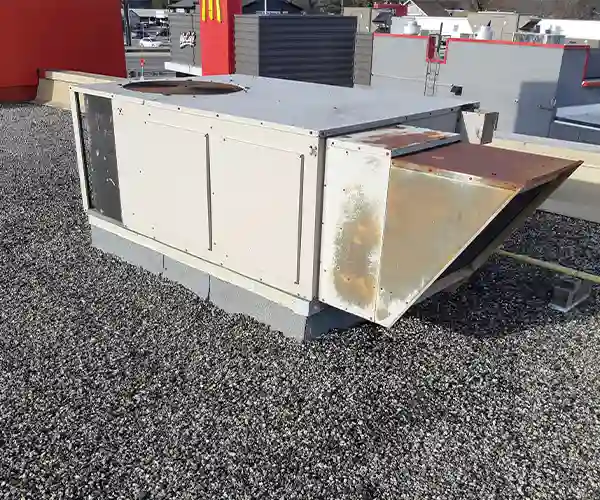
HVAC Curb Repair and Installation
A curb is the raised frame the rooftop unit sits on, and the flashing that wraps it is one of the most failure-prone details on any flat roof. On a plaza with 20 or 30 units, that’s 20 or 30 potential leak points right there. Vibration, foot traffic from service techs, and thermal cycling all work against the seal, and when a curb fails the leak shows up right underneath, usually in the tenant’s ceiling tiles.
Curb work runs from a simple reflash to a full curb rebuild when the wood framing underneath has rotted out from years of water getting in. On plazas with heavy-equipment tenants, curb work is never one and done.
Roof Penetration Repair
Every pipe, vent, conduit, and drain through the membrane is a penetration, and every one of them needs to be terminated watertight. On a plaza, penetrations multiply every time a tenant changes or a new system goes in. A lot of what we repair on penetrations is re-detailing work that was done without the right primer, with the flashing terminated short, or with sealant alone where a mechanical detail was needed. All of it is fixable, but it takes a roofer who knows the membrane system to do it right.
Case Study: 30-Year-Old Shopping Center Replacement in Barrie
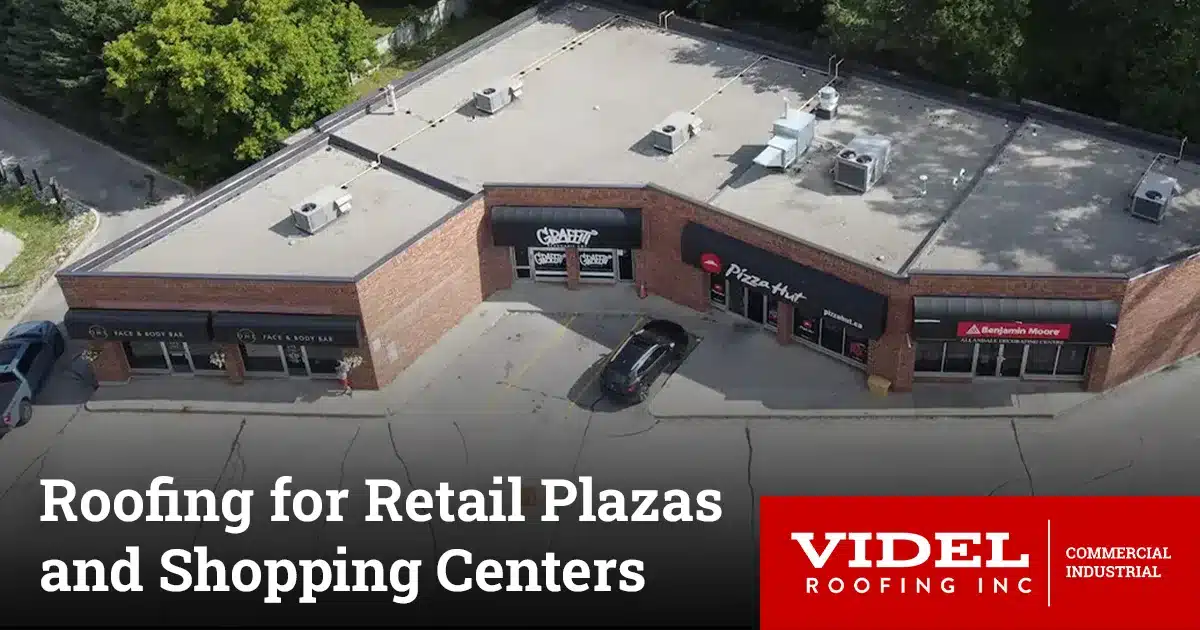
This Barrie plaza had a tenant mix that made the roof’s condition easy to explain. Pizza Hut was pushing grease out of the kitchen exhaust. Benjamin Moore was running solvent ventilation for paint products. Pizza Hut had its own kitchen exhaust setup next door. Several tenants, several different kinds of wear, all on the same 30-year-old roof.
The original 4-ply BUR had gone down with fiberglass insulation, which was standard at the time but has a fraction of the thermal resistance of modern polyiso. Leaks had been forming for years, patches were buying less and less time, and the drains, plumbing vents, and furnace exhaust stacks were all the same age as the membrane. At that point, fixing one thing just meant waiting for the next thing to fail.
We stripped the full system and fiberglass insulation down to the deck. Every roof drain, plumbing vent, and furnace exhaust stack was replaced. We put down 1.5″ polyiso (a real upgrade in thermal performance that cuts energy loss in both winter and summer) and installed a new 4-ply built-up roof on top of it. Perimeter flashings were finished with 2-ply modified bitumen and 26-gauge pre-painted metal cap flashing for a clean, weathertight edge.
When a plaza roof is 30 years old and leaking from multiple points, replacing just the membrane is a waste of money. The insulation, drains, vents, and flashings are the same age as the membrane and in the same condition. The Barrie replacement treated the roof as a system, which is the only way these jobs hold up.
What the Best Plaza Owners Do Differently
The difference between a plaza that runs quietly and a plaza that cycles through tenant complaints isn’t luck. It’s how the owner runs the roof.
Tenants notice roof problems before the owner does. A water stain shows up in the grocer’s aisle, the fitness studio’s change room, the QSR’s kitchen, and the first call is to the property manager. Every call is a reminder to the tenant that the building isn’t being maintained. Over a lease cycle that adds up. Renewals get harder, rent negotiations get sharper, and anchor tenants start asking pointed questions about the condition of the building.
The plazas that run well share a short list of habits:
- Twice-a-year roof walks in spring and fall, documented and tracked
- Curb and penetration checks after every tenant turnover that involved rooftop work
- Grease containment boxes cleaned on a schedule, not after a complaint
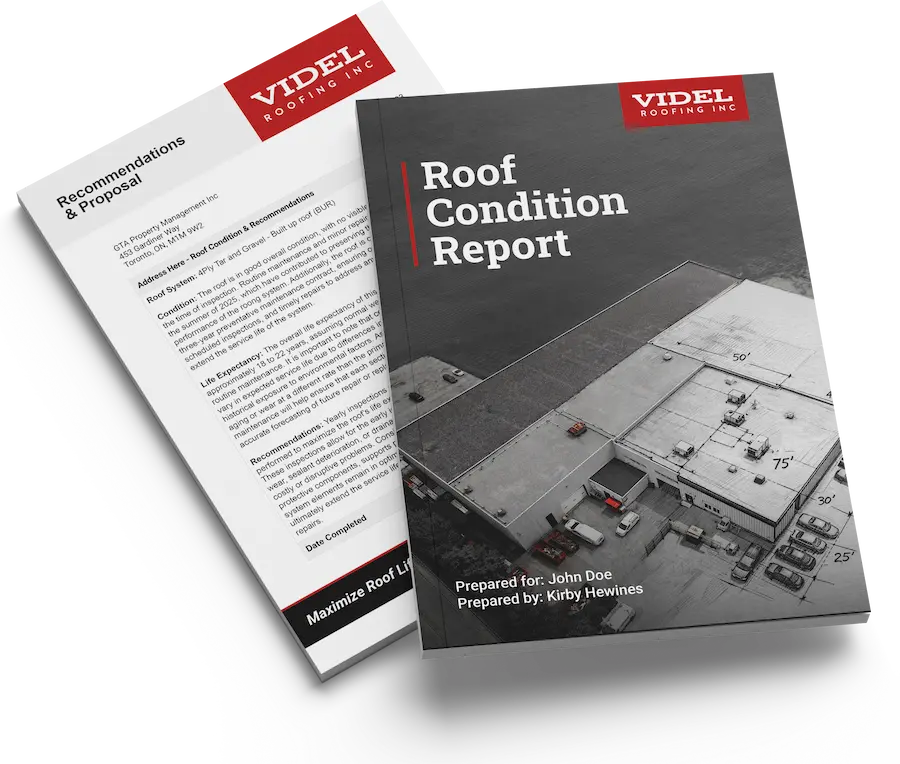
- A Preventative Roof Maintenance Plan so small problems never reach the tenant
The Ontario Roofing Report tracks the cost gap between reactive and proactive maintenance across 15 Ontario commercial and industrial properties. What the data shows is consistent: roofs on a maintenance plan last longer, cost less to keep running, and generate fewer tenant complaints across the lease cycle.
MAXIMIZE ROOF LIFE WITH A
Preventative Roof Maintenance Plan
Avoid surprise repairs and extend the time between costly replacements with expert maintenance tailored to your roof.
Reduce costly repairs
Prevent leaks & damage
Extend roof life
When a Strip Plaza Roof Is Past Its Prime
If the patches aren’t holding, the insulation is saturated, and the penetrations are leaking faster than anyone can reseal them, the answer is replacement. Another repair cycle won’t buy much, and another season of chasing leaks through the ceiling tiles costs the tenants more than it costs the roof. A proper plaza replacement looks like this:
- Strip the failing membrane and any saturated insulation down to the deck. The insulation is almost always wetter than the owner expects on an older plaza.
- Replace every drain, plumbing vent, and exhaust stack that’s the same age as the membrane. They’ll fail in the same window if they aren’t swapped out.
- Upgrade the insulation to modern polyiso if the original was fiberglass or underperforming board. The energy savings compound year after year.
- Install a system rated for the tenant mix. A 4-ply BUR takes foot traffic and mixed mechanical loads better than most single-ply options on retail.
- Flash every curb, penetration, and perimeter edge properly. This is where most future leaks come from when corners get cut.
- Back the work with a warranty that means something. Our replacements come with a 10-year warranty on workmanship, labour, and materials.
A plaza roof done this way gives you decades, not years, before replacement comes up again. More importantly, it ends the tenant disruption calls, the chargebacks, the ceiling tile replacements, and the emergency service calls that eat into the operating budget every time it rains hard. Owners weighing whether to repair or replace can also model the capital preserved by extending a roof’s life before committing either way.
What is the most common cause of leaks on a strip plaza roof?
HVAC curbs and roof penetrations cause most of the leak calls we get on retail plazas. Every rooftop unit sits on a curb that has to be flashed watertight, and every pipe, vent, or conduit through the membrane is another potential leak point. On plazas with heavy tenants like fitness studios or food service, curb damage from vibration and heat cycling is ongoing.
How often should a shopping center roof be inspected?
Twice a year minimum, in spring and fall, plus an extra inspection after any tenant turnover that involved rooftop work. Plazas with food service, fitness, or grocery tenants benefit from more frequent walks because those categories wear the roof harder than average. A proper inspection documents every curb, penetration, drain, and seam on the roof.
What is the lifespan of a 4-ply BUR roof on a shopping plaza?
A properly installed 4-ply BUR runs 35 to 40 years when the membrane is maintained and the penetrations are detailed correctly. EPDM and TPO systems on the same plaza typically fail sooner, usually from shrinkage at edges and curbs, which is why BUR is the right call on most heavy-traffic retail roofs.
Can you repair individual tenant bays without redoing the whole roof?
Yes, when the rest of the roof is sound. Bay-specific repairs are routine when one tenant’s mechanical load has damaged the section above their unit. The real question is whether the surrounding membrane has enough life left to be worth keeping. If the whole plaza roof is 25 or 30 years old, bay repairs are rarely the right economic call.
How long does a full plaza roof replacement take?
Most multi-tenant plaza replacements run 5 to 7 working days depending on square footage, tenant access, and how complicated the mechanical penetrations are. We work around tenant hours where we can, and tenants stay open for business through the replacement.
Protect Your Plaza’s Roof Before the Next Leak Call
If your plaza is cycling through repairs faster than last year, or you want to know what shape the roof is actually in before you spend another season patching it, it’s time for a proper flat roof replacement assessment. Call (905) 397-1198 or contact us online for a free quote.