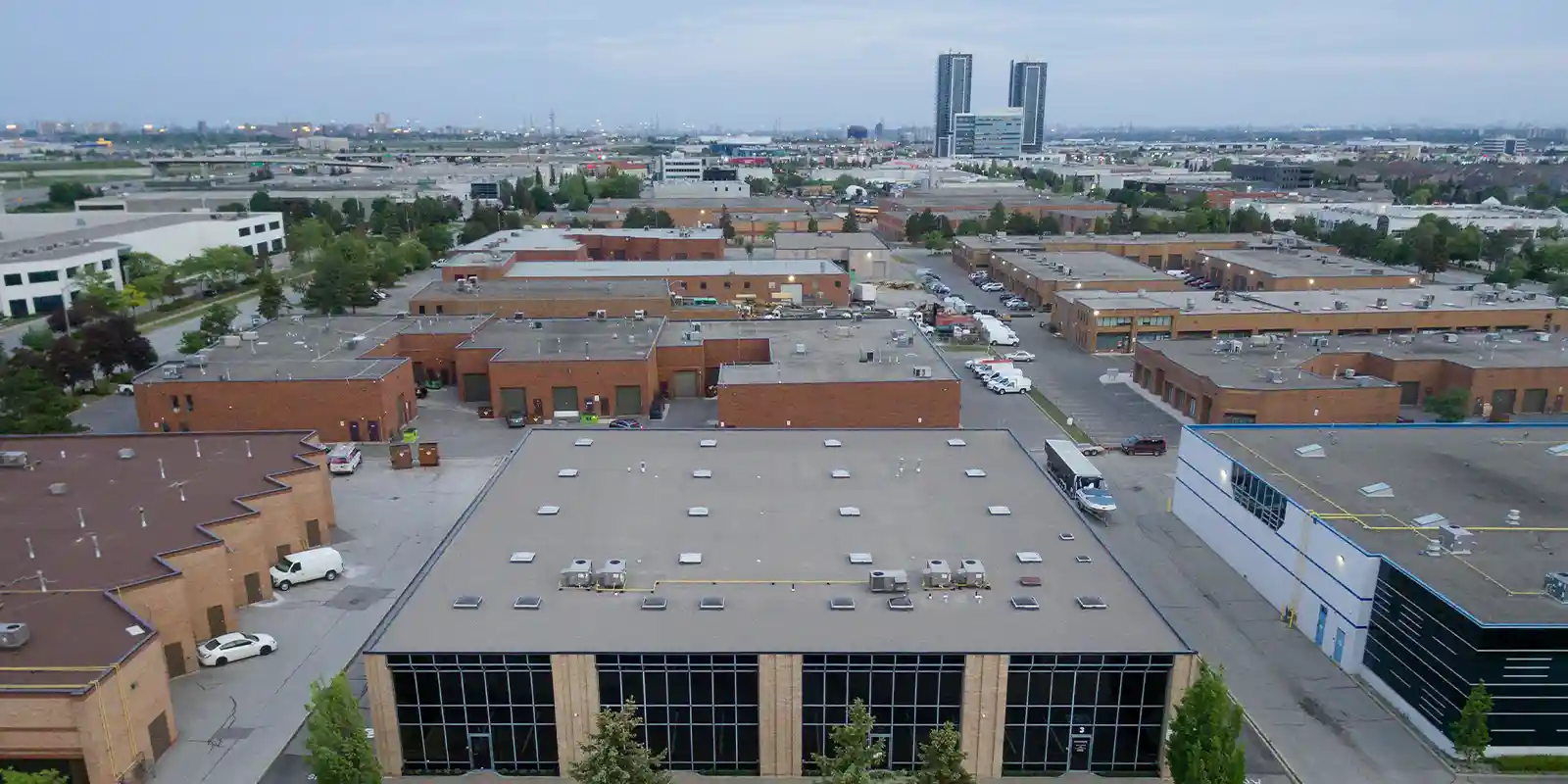

Key Takeaways
- Spring inspections catch winter damage: ice-related membrane splits, blocked drains, flashing movement from freeze-thaw cycles.
- Fall inspections prep the roof for winter: drain clearing, membrane integrity check, flashing and seam review before snow load arrives.
- A drone roof inspection takes about an hour on most commercial buildings, with a written report back inside a couple of days.
For property managers and building owners responsible for commercial flat roofs in Ontario, roof inspections are one of those things that gets pushed to “next quarter” until a leak forces the issue. The problem is that by the time a leak shows up inside the building, the damage that caused it has usually been developing for months and years.
A scheduled roof inspection offers a checkpoint that separates a $300 drain repair from a $30,000 replacement. The question for most owners isn’t whether to inspect, but when.
This post walks through how often commercial flat roofs should be inspected, why spring and fall are the two windows that matter most, what a modern drone inspection actually looks like, and why winter calls still need a roofing contractor on speed dial.
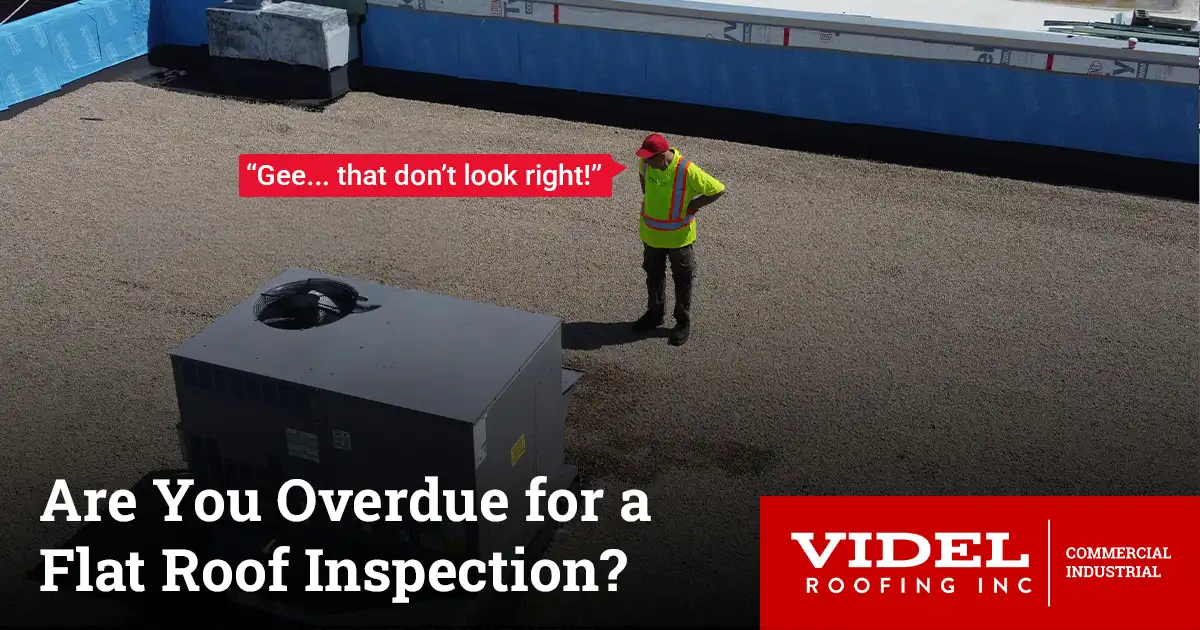
What is a Commercial Roof Inspection?
A commercial roof inspection is a documented assessment of the roof’s current condition, done by a qualified roofing contractor. The deliverable is a written report with photographs that records what was observed and what needs attention, ranked by urgency.
On a flat commercial roof, a proper inspection covers:
- The membrane surface, checked for blistering, splits, seam separation, and puncture damage
- Flashings at parapets, curbs, penetrations, and edge terminations
- Drains, scuppers, and gutters, checked for blockages and proper flow
- Rooftop equipment and penetrations, including HVAC curbs, vents, pipes, and skylights
- Pitch pockets, expansion joints, and any areas of previous repair
- Visible signs of ponding water, vegetation growth, or debris accumulation
The inspector walks the roof, documents what they find, and produces a report that a property owner, insurer, or incoming buyer can actually use. An inspection without documentation isn’t an inspection. It’s a visit.
How Often Should I Get My Roof Inspected?
Industry associations typically recommend at least one professional inspection per year. In practice, twice a year is the right answer for commercial and industrial flat roofs in Toronto, and here’s why.
Ontario’s climate is one of the hardest in North America on flat roof systems. Freeze-thaw cycles, heavy snow loads, summer UV exposure, and thunderstorm hail all stress the membrane in different ways at different times of year. A single annual inspection misses half the story. A roof walked in October tells you nothing about what happened under the snow in February.
The twice-a-year approach, spring and fall, is the standard we recommend to every property owner we work with:
- Spring catches the damage winter caused
- Fall catches the problems that developed through summer and prepares the roof for winter
Our Preventative Roof Maintenance Plan is built around this cadence. Spring and fall inspections, plus additional visits after major weather events, plus priority scheduling when something comes up between visits.
Why Spring and Fall Roof Inspections?
Each inspection window serves a different purpose. Skipping either one leaves a blind spot in the roof’s condition history.
Spring inspections: assess winter damage
Ontario winters are rough on flat roofs. Between November and March, a commercial roof absorbs:
- Repeated freeze-thaw cycling that opens small splits in aging membrane
- Snow load that stresses flashings, seams, and drainage systems
- Ice damming at drains and scuppers that can back water up onto the field of the roof
- Thermal shock from rapid temperature swings (a Chinook at -10°C to +5°C in 24 hours)
A spring inspection, typically scheduled between late March and early May once the snow has cleared, catches all of this before a summer thunderstorm finds the weak spot for you. Typical spring findings include new membrane cracks near parapets, dislodged flashing, and drains that held debris under snow all winter.
Fall inspections: prepare for winter
Fall inspections happen between late September and early November, before the first hard freeze. The job is two-fold: catch anything that developed during the summer UV and thermal cycling season, and make sure the roof is buttoned up before winter conditions arrive.
Fall inspection priorities:
- Clear drains, scuppers, and gutters of leaves, debris, and sediment
- Check membrane integrity on the south and west exposures where UV damage concentrates
- Review all flashings, curbs, and penetrations for summer-cycle thermal movement
- Confirm pitch pockets are sealed and haven’t dried out under UV
- Document any minor damage that should be repaired before snow load arrives
The fall visit is the one that gets skipped most often, and it’s the one that matters most. A roof entering winter in poor condition is a roof that will require emergency service at 2 AM in February. A roof entering winter with a clean bill of health usually makes it to spring without incident.
Should I Do a Roof Inspection After a Major Storm?
Yes. Any significant weather event outside the normal spring and fall windows warrants an additional inspection, especially:
- Hail storms (even small hail can damage single-ply membranes)
- Wind events above 80 km/h (wind uplift, debris impact, and dislodged flashing)
- Ice storms (ice damming and weight loading)
- Heavy rainfall events that exceed the drainage system’s capacity
These inspections are typically shorter than a full spring or fall walk, focused on verifying that no acute damage occurred.
Drone Inspections = Faster, Cheaper, Safer
Traditional roof inspections require crew access to the roof, safety tie-offs, and a full physical walk. That process is time-consuming on larger commercial buildings and comes with real safety considerations on older or damaged roofs.
Drone inspections solve most of those problems. A certified drone pilot flies a grid pattern over the roof, captures high-resolution imagery of the entire surface, and pairs that with thermal imaging to identify trapped moisture under the membrane. The inspector reviews the footage, flags the issues, and produces a written report back to the property owner.
For most commercial buildings, the benefits are:
- Speed. A drone inspection takes about an hour on site, even on buildings over 50,000 sq ft
- Safety. No one steps onto the roof unless the drone imagery flags something that needs a closer look
- Coverage. The drone captures every square foot of the roof, not just the areas the inspector walks
- Documentation. The imagery is archived and comparable year over year, so changes in condition are easy to track
- Thermal imaging. Infrared scans identify wet insulation zones that are invisible from the surface
A written report typically lands back with the property owner within a couple of business days. The cost is competitive with a traditional walk-through, and for larger roofs or roofs in poor condition, the drone option is often the faster and safer choice.
Learn more about our drone roof inspection service.
What About Winter? Is My Roofer Available in the Off-Season?
Winter is the season when flat roofs produce the most emergency calls. Ice damming at drains, snow load stress on aging membrane, and freeze-thaw leaks are all concentrated in the December-to-March window. A roofing contractor who disappears for the off-season isn’t a contractor worth keeping on the vendor list.
Our crews work year-round. Through the winter months, we handle:
- Emergency leak repairs when a tenant calls about water inside the building
- Snow load assessment on large-footprint roofs where accumulation is a structural concern
- Roof snow removal on buildings where snow weight is approaching design thresholds
- Ice dam mitigation at drains and scuppers where refreeze cycles are blocking water flow
- Tarp and temporary patch work to stabilize a damaged roof until a permanent repair is possible in warmer weather
Need a 4-Seasons Flat Roofing Contractor?
Videl Roofing is always here to help. No matter the season. Even on a snow day.
What a full inspection cycle looks like over a year
For a commercial or industrial building on a proper maintenance schedule, the year runs something like this:
- March to May. Spring inspection. Walk the roof, clear winter debris, flag damage, repair what needs repairing before summer thunderstorms arrive.
- June to August. Summer. Generally the quietest period for most commercial roofs. Response-only for storm events or leaks.
- September to November. Fall inspection. Clear drains, check membrane, tighten flashings, button up penetrations before the first freeze.
- December to February. Winter. Response-only for emergency leaks, snow load issues, or ice damming. Formal inspections resume in spring.
Two full inspections, a year’s worth of written documentation, and responsive service in between.
Ready to book your roof inspection?
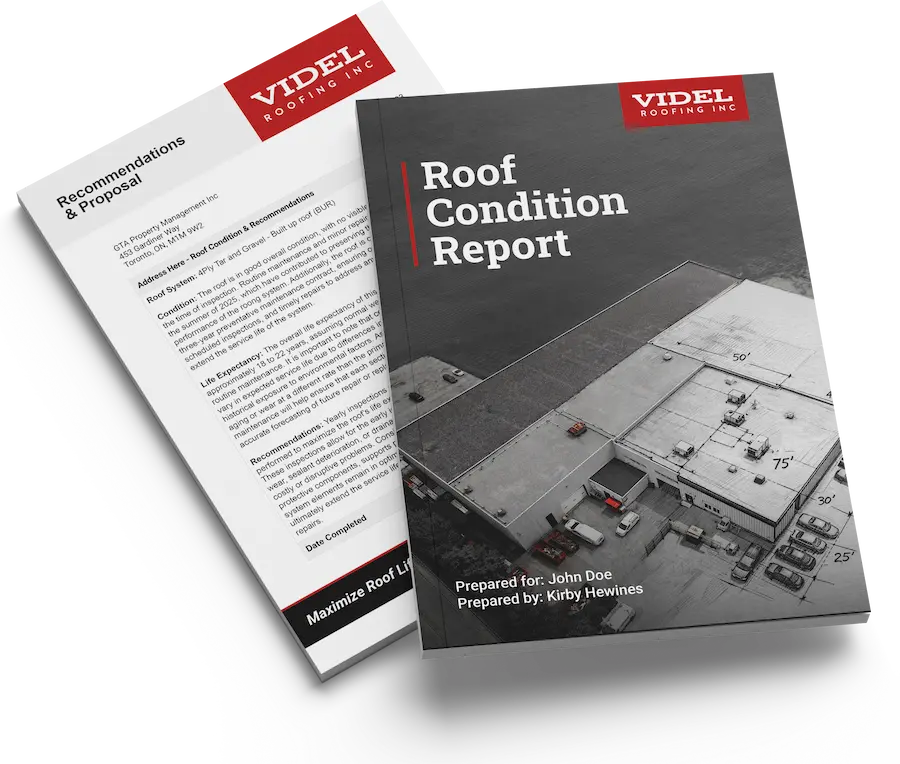
The most useful thing a property manager can do before the next winter hits is get a baseline on the roof’s current condition. Our free Roof Condition Report is the 50+ point assessment we use as the starting point for every maintenance plan. It includes written documentation, photographs, and recommendations ranked by urgency.
Learn more about our drone roof inspection service, or call (905) 397-1198 or contact us online to schedule an inspection.
How often should a commercial flat roof be inspected in Ontario?
Twice a year at minimum: once in spring to assess winter damage, and once in fall to prepare for the coming winter load. Post-storm walks should be added after significant weather events. This cadence reflects the freeze-thaw stresses specific to Ontario’s climate.
What does a commercial roof maintenance program cost?
Cost varies based on roof size, condition, and the scope of the plan. For most mid-size commercial and industrial properties in Ontario, annual maintenance is measured in cents per square foot rather than dollars, and is structured to be a fraction of what a single unplanned repair or accelerated replacement would cost.
Will documented maintenance help with an insurance claim?
Documented inspection and repair records help establish the condition of the roof before a loss event, which supports the distinction between covered sudden damage and excluded wear or neglect. Coverage specifics and documentation requirements vary by carrier and policy, so property managers should confirm expectations directly with their insurer. The Insurance Bureau of Canada publishes general guidance on commercial property coverage.
What is the difference between a roof inspection and a maintenance plan?
An inspection is a one-time documented assessment of current condition. A maintenance plan is an ongoing engagement that includes scheduled inspections, minor repairs performed on-site, and priority response to issues as they develop. The Preventative Roof Maintenance Plan page outlines what each tier includes.
Can I get a one-time roof assessment without a maintenance contract?
Yes. Videl’s free Roof Condition Report is a standalone deliverable requiring no contract. It documents current condition, identifies immediate concerns, and provides a three-to-five-year outlook suitable for budgeting, insurance documentation, or a second opinion.