tapered insulation for flat roofs
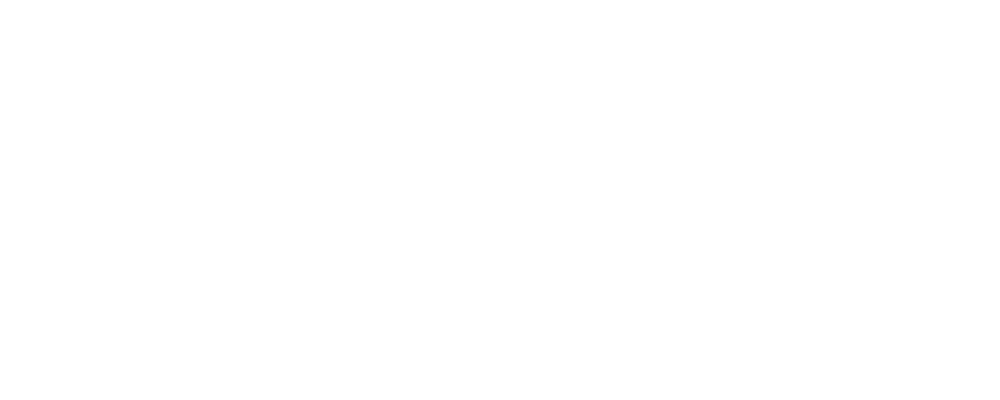
Does your flat roof have ponding?
Standing water might look harmless, but it seeps into seams, weakens materials, and shortens your roof’s lifespan. Tapered insulation is the cost-effective way to redirect water where it belongs: down the drain.
Book your free roof assessment today!
Tapered insulation for flat roofs are a smart alterative when new plumbing is not possible or too expensive.
CASE STUDY
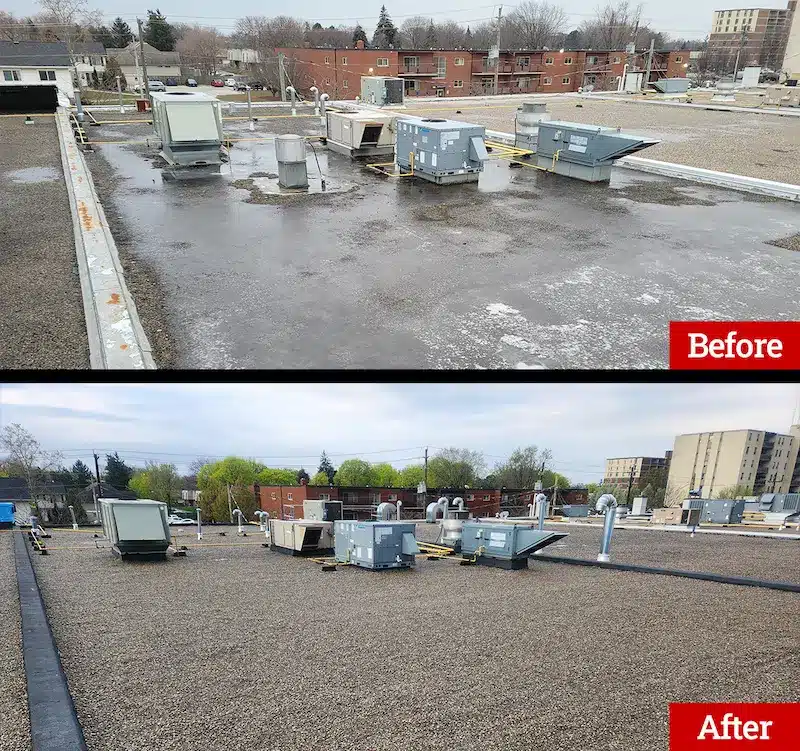
From a 3-Inch “Great Lake” to a New Roof with Proper Draining
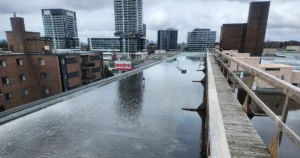
This building in Burlington had severe ponding with more than three inches of standing water that just wouldn’t drain. At first, they were quoted $20,000 for new plumbing and drainage. That’s why they turned to us for an alternative quote.
We designed a tapered insulation system that corrected the slope and drained the water properly for just $8–9K. In addition to cutting costs, the tenants never had to close or stop operations.
Key outcomes:
OUR ASSESSMENT PROCESS
Take the First Step toward Fixing Your Ponding Problem
Flat roofs often look fine from the ground, but the real story is told on the surface. Our assessment focuses on the factors that cause leaks, ponding, and long-term damage so you get the most cost-effective fix.
What happens when you book a FREE roof assessment?
On-site inspection
We walk the roof, document what we see, and photograph any ponding, membrane damage, weak spots, or drainage issues. This gives you visual proof of the roof’s condition and helps us confirm what’s actually causing the problem — not what it might be.
Measure puddles + drains
The depth and size of the puddles tell us exactly how much slope we need to build and what materials will be required. Accurate measurements mean an accurate quote — no guessing, no over-building, and no surprises once work begins.
Core sample (if re-roof is required)
A core sample shows us what’s under the membrane: insulation type, thickness, moisture, and whether the insulation can be reused. This step is essential when a full re-roof is being considered because it directly affects disposal costs, material choices, and overall project scope.
FREE
ROOF ASSESSMENT
We’ll visit your location to inspect your roof and provide a free, no-obligation health report.
“I had other estimates submitted by competitors but my decision to give the contract to Videl Roofing was quick as I determined Kirby to be most trustworthy to get the job done right!“
Pat Villani
Commercial Property Owner, St. Catharines
NOT ALL ROOFS NEED TAPERED INSULATION
We Don’t Always Recommend Tapered Insulation
Tapered insulation works incredibly well, but it isn’t the answer for every roof. When we spot something that requires engineering, new plumbing, or a different approach, we’ll be honest about it before you spend a dollar.
Here are situations where we won’t recommend it:
 Watch Video
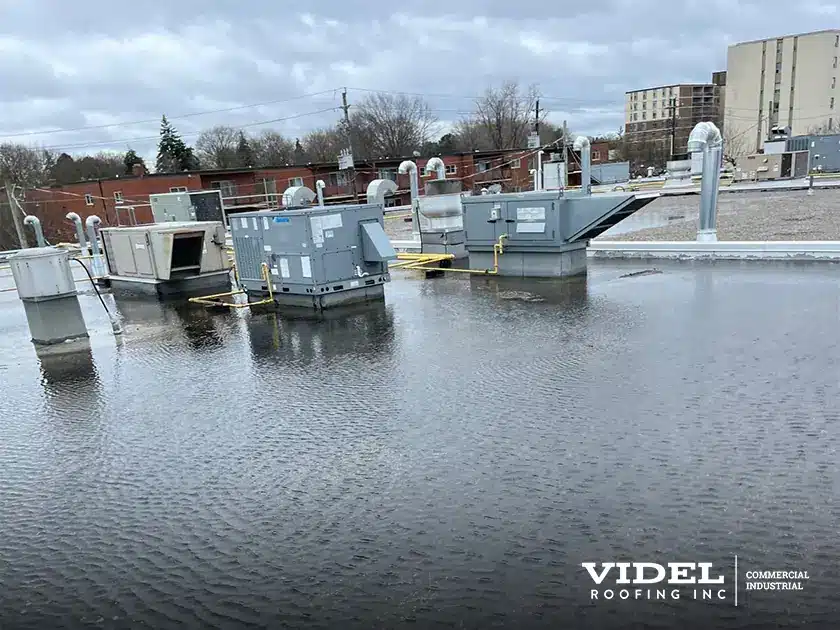
“As a rule of thumb, if your roof has ponding water 3 days after it rains, you have a problem.”
FREQUENTLY ASKED QUESTIONS
Tapered Insulation for Flat Roofs
Q1. What is tapered insulation?
Tapered insulation is an add-on layer we install on top of your existing flat-roof assembly to create proper slope toward your drains or scuppers. Instead of leaving water sitting in low spots, we build the roof up using factory-tapered 4×4 or 4×8 panels—typically in 2-inch increments—to guide water off the roof the way it should go.
It’s a simple, cost-effective fix for ponding that doesn’t require touching anything inside your building.
Q2. How much does tapered insulation cost compared to other insulation?
Tapered insulation is almost always cheaper than installing new drains or plumbing. In one real example, the plumbing tie-in alone was quoted around $20,000, while the tapered insulation system solved the entire ponding issue for $8–9K—less than half the price, with zero interior disruption.
Depending on your roof, tapered systems usually land well below the $10K–$50K range typical for major drainage changes.
Q3. Why should I use tapered insulation instead of installing new drains?
Because it fixes the problem without opening walls, tearing apart interior spaces, or paying for expensive plumbing work.
A new drain connection often requires cutting through block walls, running pipe through the building, and coordinating with plumbers—and that drives costs through the roof. Tapered insulation gives you the slope you need from the exterior only, eliminating the ponding for a fraction of the cost and without shutting down your business.
Q4. Does tapered insulation affect my flat roof’s R-value?
Yes—in a good way.
Because tapered insulation is built from stacked layers, you naturally add thickness to your roof assembly. That increases your R-value, which helps stabilize indoor temperature, which helps you cut heating and AC costs.
Q5. How do I know if tapered insulation is the right choice for my property?
Most people don’t realize they have a ponding issue until its too late. The rule of thumb I tell every customer is simple:
If you’ve got standing water on your roof three days after it rains, you’ve got a problem
That’s when tapered insulation becomes the right solution for most buildings. It lets us build slope toward your existing drain without touching anything inside—no cutting walls, no plumbing, no shutting down operations.
It’s also the better option if:
➔ Your puddles are deep or widespread. If you’re seeing an inch or more across a big area, slope correction is the only reliable fix.
➔ Your building layout makes plumbing expensive. On older buildings, tying in a new drain can run $20K or more. Tapered insulation avoids all that.
➔ You can’t afford disruption inside. With tapered systems we work from the exterior only, so tenants and staff aren’t affected.
➔ You’re already replacing the roof. This is when tapered insulation makes the most sense—it’s the perfect time to fix drainage permanently.
If any of that sounds familiar, tapered insulation is almost always the more practical, cost-effective choice.
Unsure if your ponding issue needs a full drain upgrade or just slope correction? Book a roof assessment to confirm if tapered insulation is right for your building.